Trekking Guide
Everest Base Camp Trek Difficulty: What to Really Expect
It's not a climb — no ropes, no technical sections. What makes it hard is the altitude and the number of days spent above 4,000m, not the ground underfoot.
The short answer
Everest Base Camp is a long-distance walk, not a climb. There are no ropes, no technical sections, and no climbing skill required. What makes it genuinely difficult is altitude and duration: roughly ten to twelve days of trekking, several of them above 4,000m, finishing at Base Camp itself (5,364m) and, for most groups, a pre-dawn climb of Kala Patthar (5,545m) the next morning.
Walking preparation supports the physical effort, but fitness does not remove altitude-illness risk. Individual responses vary. Discuss the itinerary with the operator and seek personal advice from a clinician familiar with altitude travel where appropriate.
Terrain, day by day
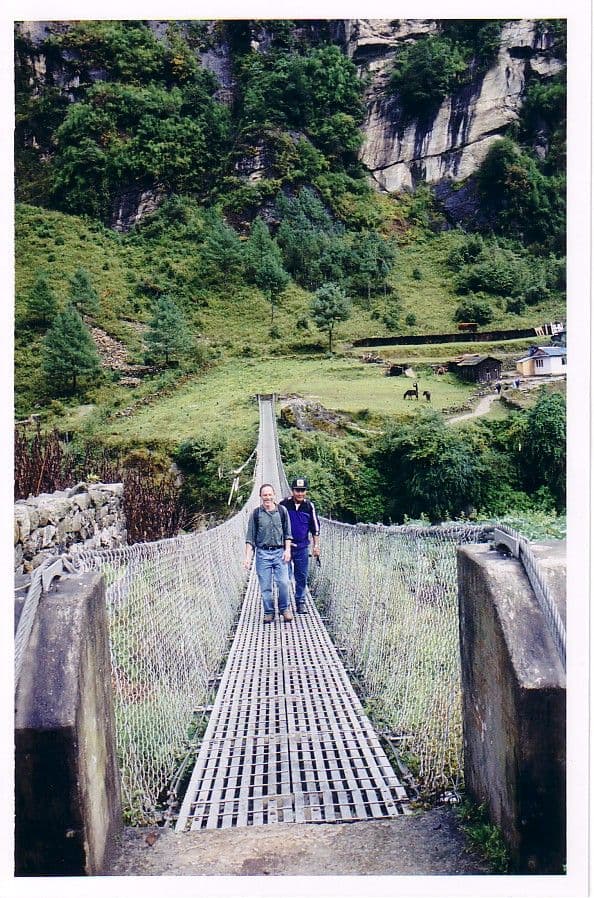
The trail itself is well-established stone and dirt path, wide enough for yak trains, with a number of suspension bridge crossings over the Dudh Koshi river — exposed but not technical. Daily walking time runs five to seven hours on a typical day, longer on the Base Camp and Kala Patthar days themselves. Net elevation gain per day is moderate by design on a well-built itinerary; the terrain rarely forces a scramble.
The one genuinely strenuous stretch is the final approach from Gorak Shep to Base Camp across the Khumbu Glacier's lateral moraine — uneven rock, no clear single path, and thin air combining to make a short distance feel much longer than it looks on a map.
What actually determines difficulty
Ascent rate matters more than fitness level. The standard mountaineering-medicine guideline is no more than 300–500m of net sleeping-altitude gain per day once above 3,000m — itineraries that skip or shorten the acclimatization days at Namche and Dingboche are harder specifically because they violate that, not because the trail gets steeper.
Weather and cold are the other real variables: overnight temperatures at Gorak Shep and Lobuche regularly drop well below freezing outside the main season windows, which changes how hard the trek feels independent of the walking itself.
How to actually prepare
Cardiovascular fitness helps but altitude tolerance varies by individual and can't be trained away entirely — some very fit people acclimatize poorly, and some less fit people do fine on a conservative itinerary. The most useful preparation is hill walking or stair climbing with a loaded daypack in the weeks before departure, and picking an itinerary that doesn't rush the acclimatization days regardless of how fit you feel going in.
Ready to see Everest for yourself?
Tell us your dates and fitness level — we'll reply with a route recommendation within two business days.