Explore Everest
Villages & Culture of the Khumbu
The Khumbu is a living Sherpa homeland, not a backdrop — monasteries, prayer walls and working villages line every route on this site.
Who lives here
The Sherpa people migrated into the Khumbu from eastern Tibet roughly 500 years ago, bringing with them the Tibetan Buddhism that still defines the region's culture. They speak their own Sherpa language, related to Tibetan, and "Sherpa" itself is an ethnic identity — a specific people with their own history — not simply a job title for a mountain guide, even though the two have become closely associated internationally since the 1950s.
Tengboche Monastery
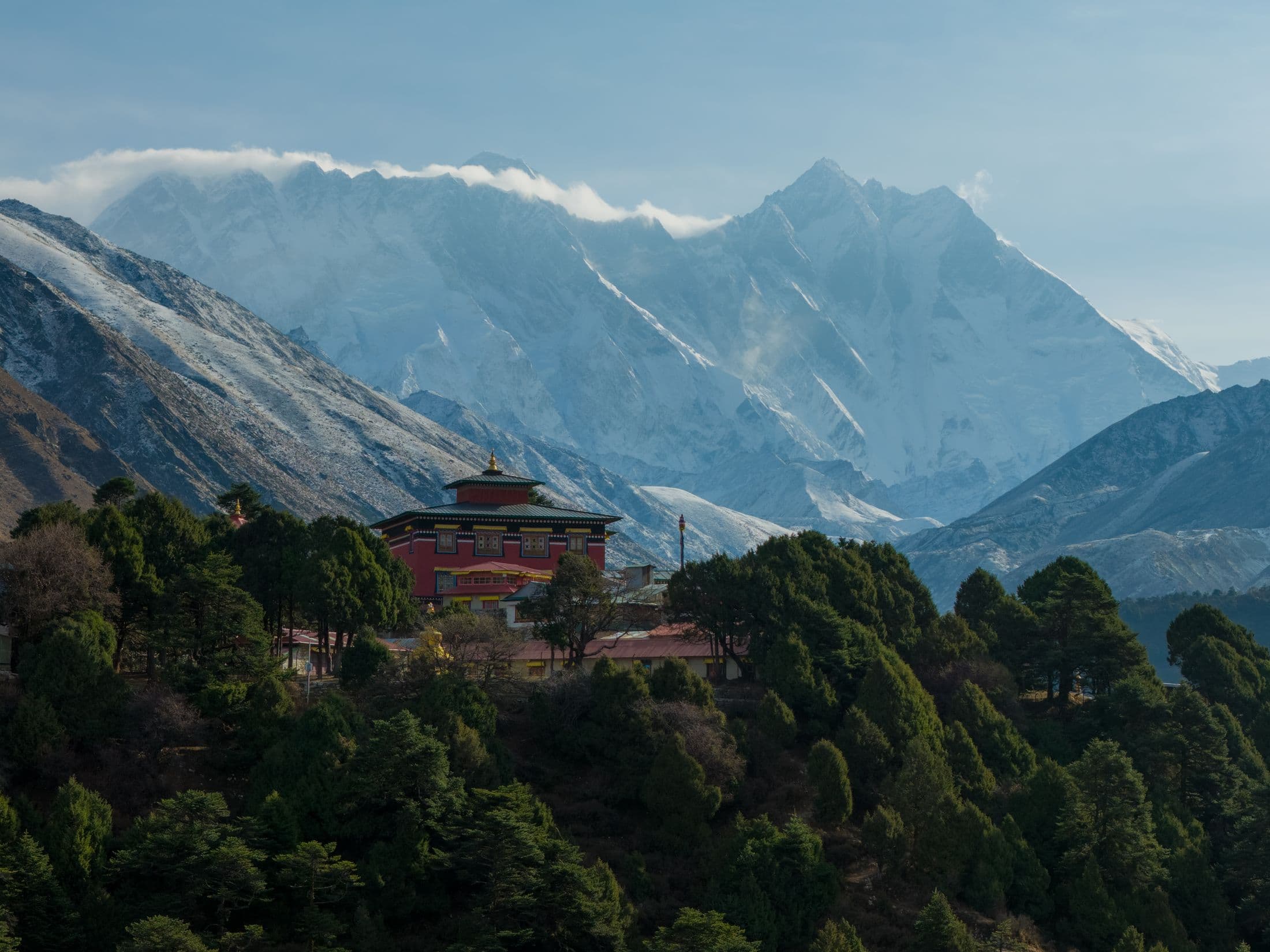
Tengboche is the largest monastery in the Khumbu and sits directly on the main Base Camp trail, with one of the most photographed backdrops in the Himalayas — Everest, Nuptse and the Lhotse wall rising behind it. Most itineraries pass through around the third day, and the monastery is open to respectful visitors outside of prayer sessions, which are typically held morning and evening.
Faith on the trail
Mani stones carved with the mantra "Om Mani Padme Hum" line the trail edges throughout the Khumbu, prayer wheels turn at village entrances, and prayer flags strung across bridges and passes carry printed prayers meant to be spread by the wind rather than read. Convention holds that mani walls and chortens (stupas) should be passed on the left, keeping them on the walker's clockwise side.
How we ask guests to engage with it
This is a living Buddhist community, not a museum: mani stones and prayer wheels are passed on the left as custom dictates, photography inside monasteries is only ever with permission, and daily life in the villages continues around the trekking season rather than for it. Guides brief every group on this before Namche.
Ready to see Everest for yourself?
Tell us your dates and fitness level — we'll reply with a route recommendation within two business days.