Explore Everest
The Khumbu Region
The Khumbu is the district of Nepal that contains Everest, Lhotse, Ama Dablam and the trail network that reaches them — and the Sherpa communities who have lived and guided here for centuries.
Geography
The Khumbu sits within Sagarmatha National Park, established in 1976 and inscribed as a UNESCO World Heritage Site in 1979 — one of the few protected areas on Earth built around the world's highest terrain. The park covers roughly 1,148 square kilometers and protects the region's glaciers, forests and wildlife alongside its trekking trails.
Elevations along the standard routes run from Lukla's airstrip at 2,860m up past 5,500m at the highest passes and viewpoints, crossing several distinct ecological zones on the way: pine and fir forest in the lower valleys, rhododendron and juniper scrub through the middle elevations, alpine meadow above that, and permanent snow and ice past roughly 5,500m. That range shapes almost every decision an itinerary makes, from daily distance to rest-day placement.
Namche Bazaar
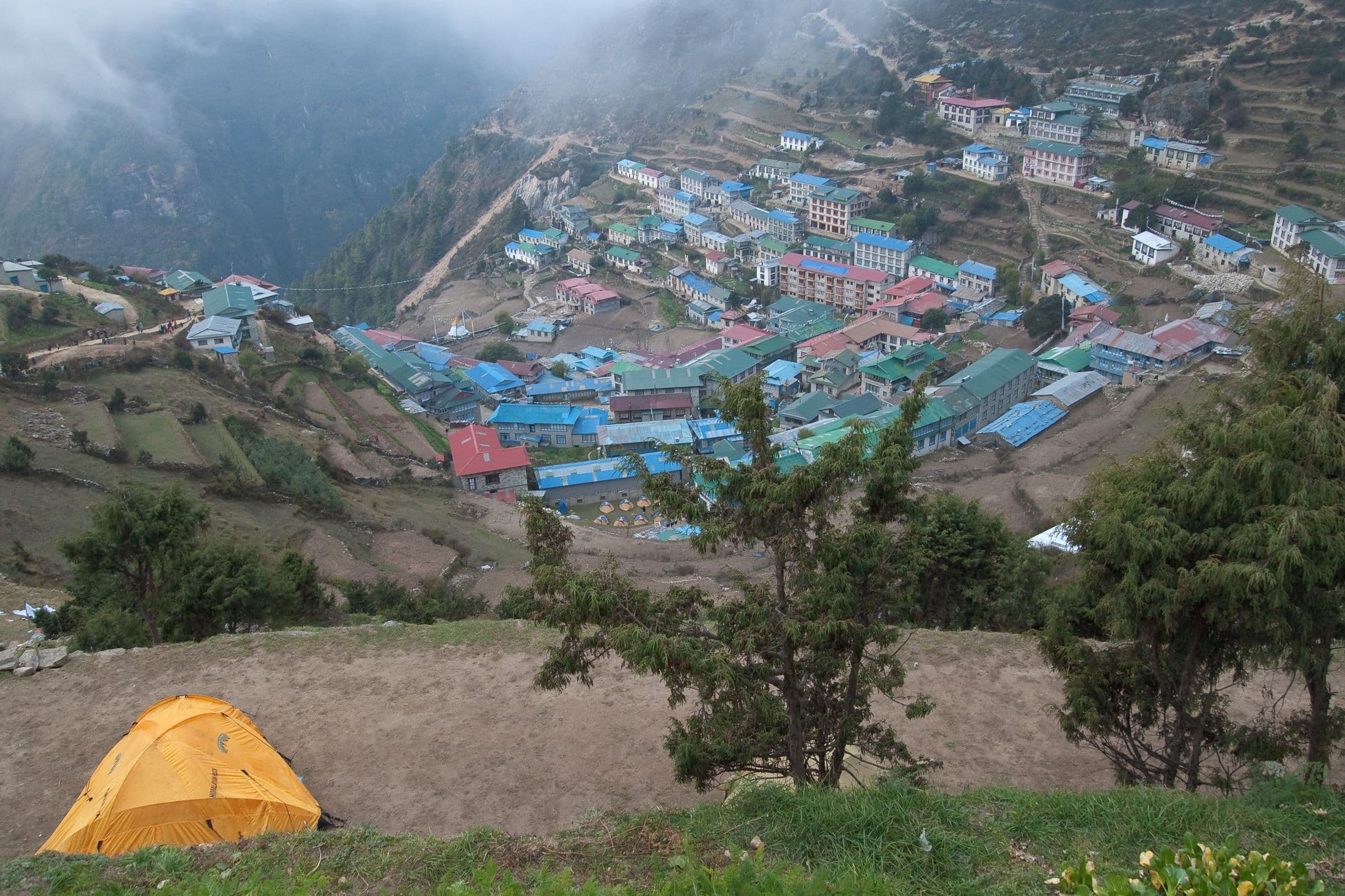
Namche is the region's hub — a terraced town built into a natural amphitheater at 3,440m, with the acclimatization infrastructure (bakeries, gear shops, a Saturday market) that has grown up around a century of mountaineering and trekking traffic passing through. Every route on this site spends at least one night here, and most spend two for acclimatization.
Long before it was a trekking hub, Namche was a trading post on the route Sherpa traders used to carry salt, wool and other goods across the Nangpa La pass to and from Tibet — a trade route that predates organized mountaineering tourism in the region by generations and still shapes the town's layout and role as the Khumbu's commercial center today.
Wildlife
Sagarmatha National Park is home to the Himalayan tahr, musk deer and pika at various altitudes, and — far more rarely sighted — the snow leopard and red panda, both present but elusive. The Himalayan monal, Nepal's national bird, and the lammergeier (bearded vulture) are both regularly seen from the trail. Yaks, the animal most trekkers actually encounter daily, aren't wild but are central to how cargo moves through terrain too high or narrow for other pack animals.
Ready to see Everest for yourself?
Tell us your dates and fitness level — we'll reply with a route recommendation within two business days.