Trekking Guide
How to Prevent Altitude Sickness on the Everest Trek
AMS is a function of ascent rate, not fitness. A very fit trekker who climbs too fast is at just as much risk as an unfit one who climbs sensibly.
Why fitness doesn't protect you
Acute Mountain Sickness (AMS) is caused by ascending faster than your body can adapt to reduced oxygen availability — it's a physiological response to rate of ascent, not a fitness or willpower problem. This is genuinely counterintuitive for a lot of trekkers, and it's the single most important thing to understand before this trek: pushing harder when you feel strong is exactly the wrong response if it means ascending faster than your itinerary planned for.
The ascent-rate guideline
The CDC Yellow Book summarises a widely used guideline: once above 3,000m, limit sleeping-altitude gain to no more than 500m per night and add an acclimatization night for each additional 1,000m gained. A well-built Everest Base Camp itinerary applies that principle to the villages along the trail. This is general travel information, not a personal medical plan.
Recognizing early symptoms
Mild AMS looks like a bad hangover: headache, nausea, loss of appetite, fatigue and poor sleep, typically starting six to twelve hours after arriving at a new altitude. These symptoms are common and expected in mild form above 3,500m — the response is to stop ascending, hydrate, and rest at the same altitude until they resolve, not to push on to the next village on schedule.
The warning signs that mean immediate descent, not rest — Ataxia (loss of coordination, an inability to walk a straight line), confusion, severe headache unrelieved by rest, or breathlessness at rest — indicate High Altitude Cerebral or Pulmonary Edema (HACE/HAPE), which can be fatal within hours if ignored. Any trekker or guide who suspects either of these should treat it as a medical emergency and descend immediately, regardless of itinerary or summit-day pressure.
What actually helps
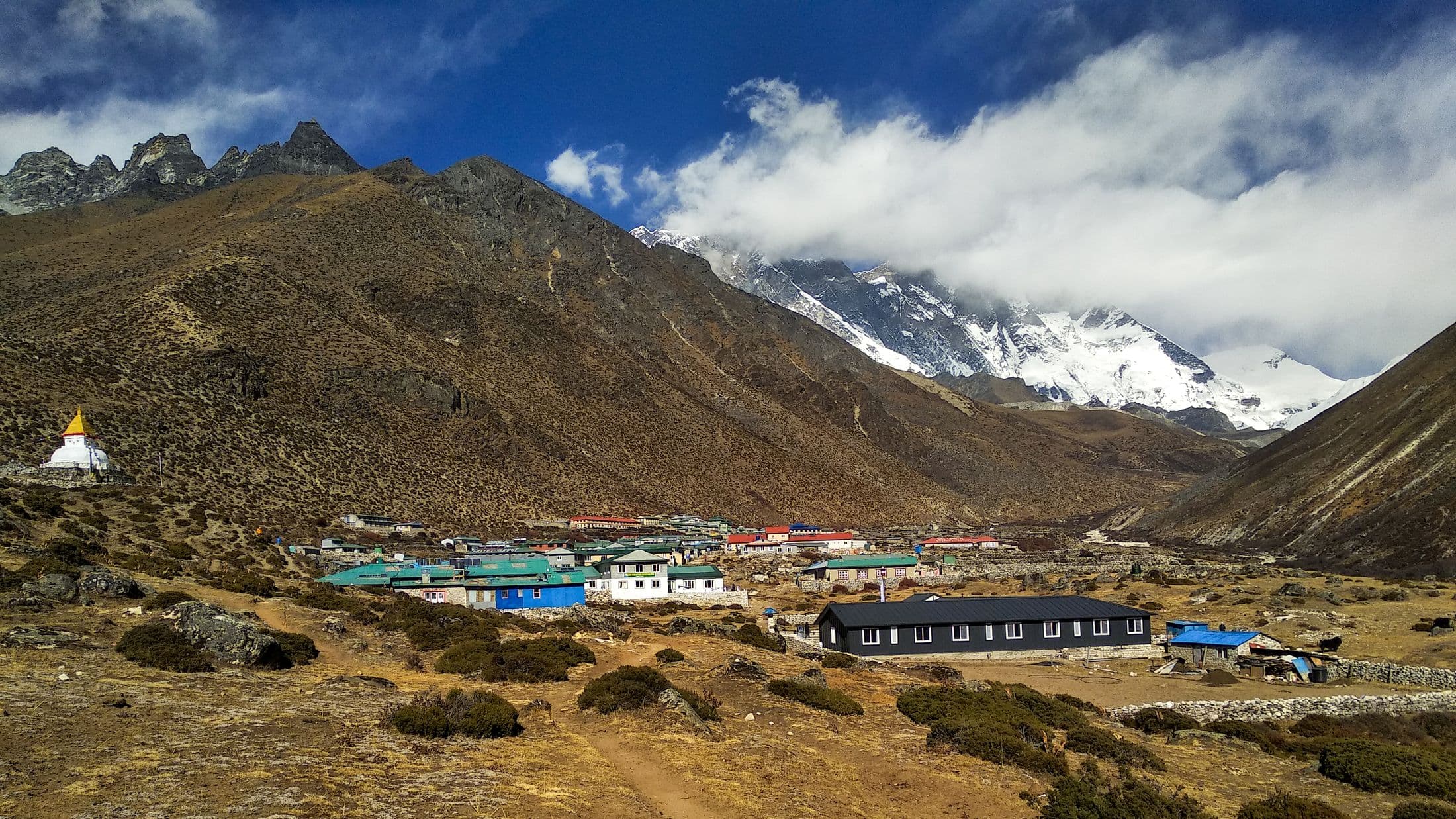
Climb high, sleep low where the itinerary allows it — the day hike above Dingboche is a classic example, gaining altitude during the day and returning to sleep lower. Stay well hydrated, avoid alcohol at altitude, and do not use respiratory depressants to sleep. Ask an operator what emergency protocol, communications equipment, and qualified medical support are actually available; a pulse oximeter is not a diagnosis or a substitute for descent.
Ready to see Everest for yourself?
Tell us your dates and fitness level — we'll reply with a route recommendation within two business days.